1. Confirm the thermostat is really asking for cooling
It sounds obvious, but it catches people every summer. The thermostat should be on Cool, not Heat or Auto, and set a few degrees below the current room temperature. If it runs on batteries and the screen is faint or blank, replace them. Smart thermostats sometimes run a schedule or “eco” mode that holds a higher temperature than you expect.
2. Look at the air filter
A clogged filter is the most common cause of weak cooling. When air can’t get through it, the indoor coil gets too cold, moisture on it freezes, and the ice blocks even more air. Hold the filter up to a light. If you can’t see through it, replace it.
3. Check the breaker and the outdoor disconnect
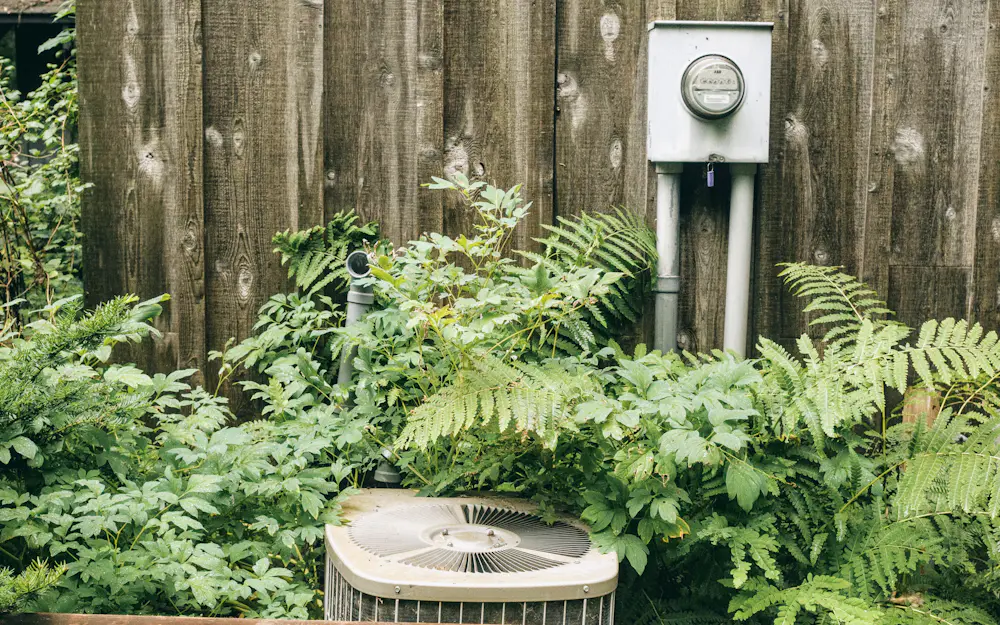
Most central systems have two breakers in the panel, one for the indoor furnace or air handler and one for the outdoor unit, plus a disconnect box on the wall next to the outdoor unit. If a breaker has tripped, reset it once. If it trips again, leave it off. Repeated trips point to an electrical fault that needs a technician.
4. Listen to the outdoor unit
With the system calling for cooling, go outside. You should hear the compressor running and see the top fan spinning. If you hear a hum or buzz but the fan isn’t turning, the capacitor has often failed. Don’t poke at the fan; the capacitor holds a charge even with the power off.
5. Look for ice
Frost or ice on the larger copper line or the indoor coil means the system needs to thaw. Switch the thermostat to Off, or set the fan to On so air keeps moving across the coil, and wait a few hours. Running a frozen system can damage the compressor. Once it thaws, a dirty filter or low refrigerant is the usual cause.
6. Check the condensate drain
Many systems have a float switch that shuts the AC off if the drain pan fills with water. If you see water around the indoor unit or the switch has tripped, the drain line is probably clogged.
7. Give it time after a restart
After the AC shuts off, most systems wait about three minutes before the compressor starts again so refrigerant pressures can even out. People call this the 3-minute rule. Many thermostats and outdoor units build in this delay, so a short pause after you change settings is normal.
What the checks can’t fix
Refrigerant leaks, failed capacitors and contactors, bad compressors and electrical faults need a technician with the right tools and, for refrigerant, an EPA certification. If none of the steps above brought the cool air back, that is the point to call.
Next step
Read about AC repair in Poway for the most common repairs, or call (858) 898-5145 to reach a local technician.